





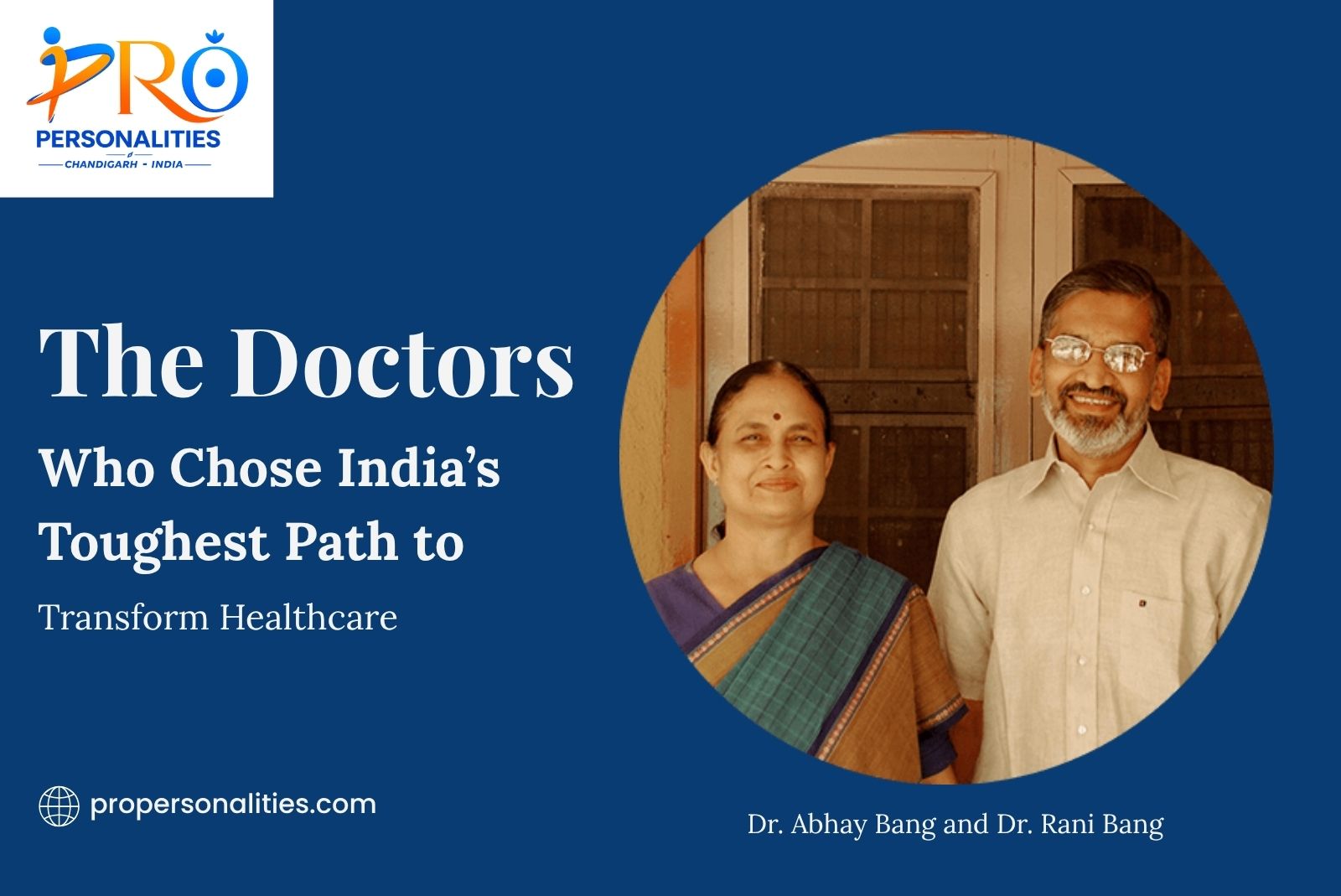




Success is often measured by prestigious careers, thriving city practices, and personal achievements. But for Dr. Abhay Bang and Dr. Rani Bang, success meant something entirely different. Instead of pursuing comfortable lives in urban India, they chose a path few would dare to take—dedicating themselves to the people of Gadchiroli, one of Maharashtra’s most remote and underserved tribal districts.
In the early 1980s, healthcare in Gadchiroli was a distant dream for many families. Villages were isolated, medical facilities were scarce, and preventable illnesses claimed countless lives. While most doctors preferred modern hospitals and city lifestyles, the Bangs saw an opportunity to make a meaningful difference where it was needed the most.
With a vision to create lasting change, they founded SEARCH (Society for Education, Action and Research in Community Health). Their goal was not simply to provide treatment but to build a healthcare system that understood local realities and empowered communities to become active participants in improving their own health.
What made their work unique was their belief that healthcare should begin where people live. Instead of relying solely on hospitals, they trained local community members and health workers to identify illnesses, provide basic care, and spread health awareness. This innovative model bridged the gap between modern medicine and grassroots participation.
Today, SEARCH serves more than 130 villages and stands as a globally recognized example of community-driven healthcare. The organization has demonstrated that quality healthcare does not always require expensive infrastructure; it requires trust, local engagement, and solutions designed around people’s actual needs.
One of Dr. Abhay Bang’s most groundbreaking contributions was the Home-Based Newborn Care model. At a time when infant mortality rates were alarmingly high, he developed a system in which trained village health workers provided essential care to newborns and mothers directly in their homes. The results were extraordinary. Infant deaths declined significantly, proving that simple, community-centered interventions could save thousands of lives.
The impact of this innovation extended far beyond Gadchiroli. Recognizing its effectiveness, the Government of India adopted the model as part of national health programs, helping improve newborn survival rates across the country and benefiting millions of families.
Dr. Rani Bang’s contributions have been equally transformative. Through extensive research and direct engagement with rural women, she uncovered widespread reproductive health issues that had long been ignored. Her work brought attention to the challenges faced by women in rural communities and highlighted the need to prioritize women’s health rather than focusing solely on population control.
Her research gained international recognition and played an important role in shaping discussions at the landmark 1994 International Conference on Population and Development in Cairo. The conference marked a global shift toward a more comprehensive approach to reproductive health and women’s rights, making her work influential far beyond India’s borders.
The achievements of Dr. Abhay Bang and Dr. Rani Bang have earned them widespread recognition. Research conducted in Gadchiroli has been published in prestigious international medical journals, including The Lancet. Over the years, they have received more than 70 national and international honors, including the Padma Shri, one of India’s highest civilian awards.
Yet, their greatest accomplishment is not found in awards, publications, or recognition. It lies in the lives they have transformed, the communities they have empowered, and the healthcare model they have built from the ground up.
Dr. Abhay Bang and Dr. Rani Bang proved that true change happens when compassion meets science and when healthcare reaches those who need it the most. Their extraordinary journey continues to inspire doctors, public health professionals, and changemakers around the world, reminding us that the most impactful work is often found far from the spotlight.